
The importance of amateur radio in disasters was discussed at Bilim Kafe.
Yapılış Tarihi | 06 February 2026, Friday

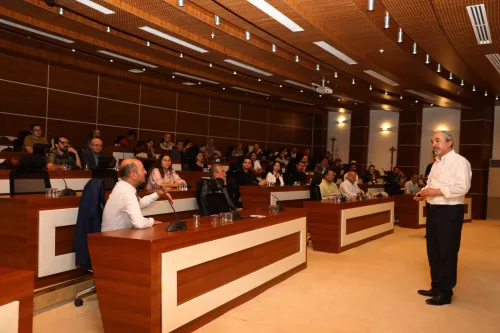
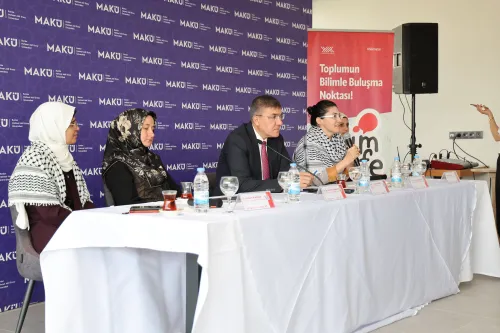
Under the coordination of the Higher Education Council (YÖK) Science Communication Office, a meaningful conversation was organized on the anniversary of the February 6 Kahramanmaraş-centered earthquakes as part of the Science Cafe events implemented simultaneously across Turkey. The event, held under the title "The Importance of Amateur Radio in Disasters and Emergencies," took place at the Burdur Teachers' House.
In his opening speech, Science Communication Coordinator Assoc. Prof. Murat Kara emphasized that they do not limit science to only academic circles, stating, "With Science Cafe events, we address topics that directly concern our citizens. Our aim is to make shares that touch every segment of society by conveying accurate information from competent individuals in their fields."
In his speech, Assoc. Prof. Kara commemorated the citizens who lost their lives in the Kahramanmaraş-centered earthquakes on February 6, 2023, with mercy and wished patience to their relatives. Highlighting that Turkey is an earthquake-prone country, Kara said, "Every citizen needs to know what to do before and after an earthquake. Especially in the post-earthquake process, the occasional collapse of communication networks has once again shown how vital amateur radio communication is. Today, we have gathered here to discuss the importance of radio use in disasters and emergencies."
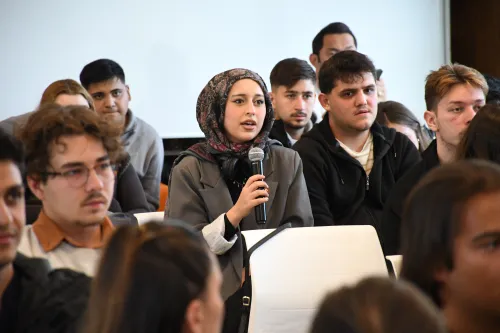
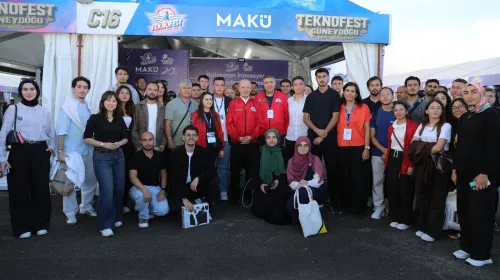
The conversation was attended by the administrators and members of the Turkey Radio Amateurs Society (TRAC) Burdur Branch and the people of Burdur. While the vital importance of communication continuity in disasters and emergencies was emphasized at the event, the critical role of amateur radio operators in times of crisis was shared with the participants.
In the training provided by TRAC Burdur Branch Vice President Mesut Pala and society member İzzet Nedim Salman as part of the program; it was explained with examples that existing communication infrastructures could be damaged in disasters such as earthquakes, floods, and fires, and at this point, the importance of amateur radio communication in providing uninterrupted communication was highlighted. The training also covered the correct use of radios, relay systems, call and conversation codes, and the basic communication rules to be followed in the event of a disaster.
In the event, which also included practical demonstrations, important information was conveyed on how individuals should act in disasters and emergencies, how to ensure the flow of accurate information, and how to establish coordination.
Mesut Pala stated that amateur radio is not just a hobby but also a volunteer activity carrying social responsibility.
The conversation ended after the participants' questions were answered, and the event was evaluated as a strong example of Science Cafe's contribution to raising social awareness.