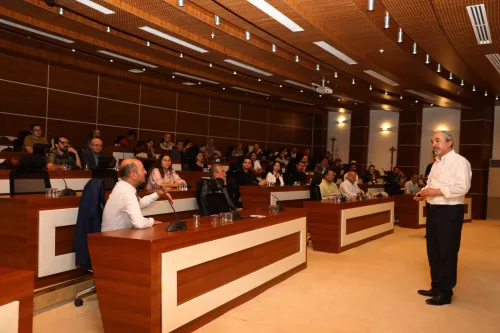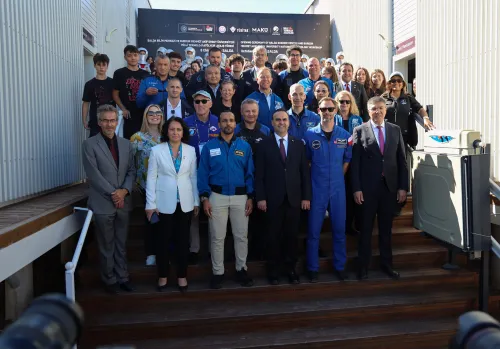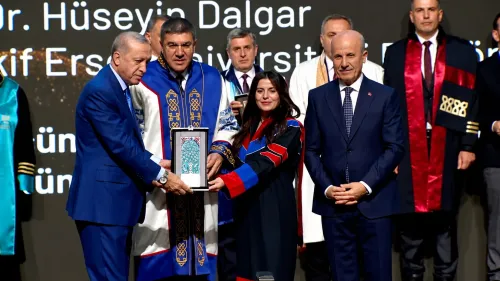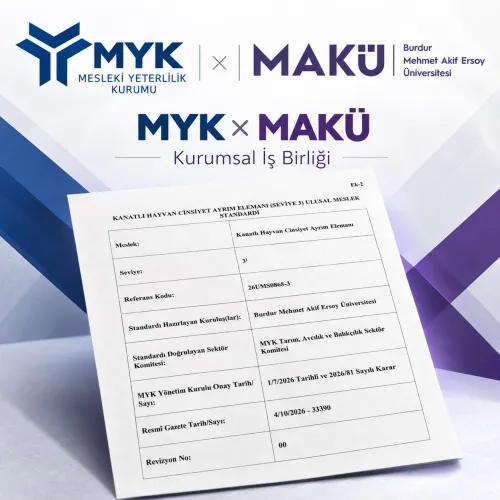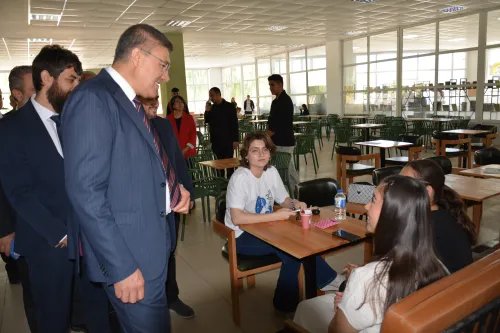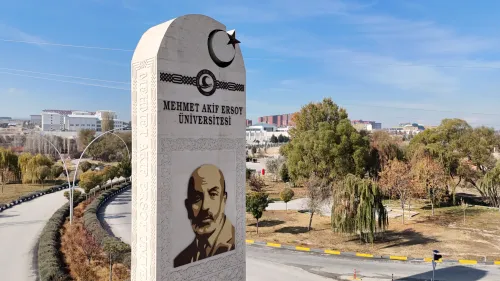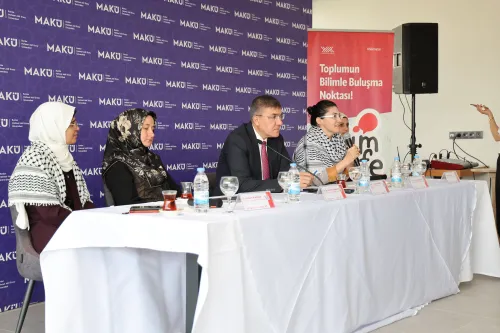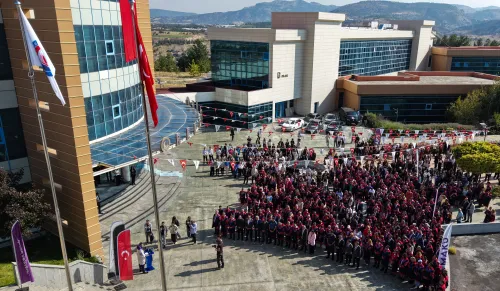


The "Sustainable Livestock, Cost Management and Productivity Workshop" organized by Burdur Mehmet Akif Ersoy University (MAKÜ) was held with intense participation. At the workshop held at Lavanta Tepesi Hotel, academics, industry representatives, and producers came together to discuss the future of livestock.
At the workshop hosted by MAKÜ, which specializes in the field of livestock; critical issues such as productivity increase, cost management, forage crop production, and sustainable agriculture practices were addressed.
"Productivity increase is the key to exiting this cycle"
Speaking at the opening of the workshop, Rector Prof. Dr. Hüseyin Dalgar emphasized the importance of productivity increase by drawing attention to the global challenges faced by the livestock sector.
Rector Dalgar stated that cost pressures in agriculture and livestock are increasing, saying, "Today, we are facing a global cost and production pressure. The way out of this cycle is to increase productivity. We have to produce more with the same resources."
Expressing that genetics and care-feeding are the main determinants of the sector, Rector Dalgar stated that they are conducting significant studies in this area as a university. Emphasizing that MAKÜ is a pioneer in Turkey in local embryo production, Dalgar said that studies aimed at developing high-yield animal breeds are also successfully implemented in the field.
Rector Dalgar also stated that it is essential to provide suitable care and feeding conditions for animals with high genetic capacity to give the desired yield, and he mentioned that this transformation will be accelerated with the planned modern farm models.
"Our priority is studies that reflect science to the field"
Speaking at the workshop, General Director of Agricultural Research and Policies Dr. Mustafa Altuğ Atalay stated that agricultural policies are shaped in the light of scientific data.
General Director Atalay expressed that instead of the understanding of "science for science," they conduct studies directly aimed at the country's needs, saying, "Our aim is to produce solutions that have a counterpart in the field, in accordance with the policies of the Ministry of Agriculture and Forestry. The collaborations we establish with our universities are of great importance at this point."
Emphasizing that the collaborations carried out with MAKÜ are extremely productive, Atalay stated that the university stands out with both its academic knowledge and application capacity.
Drawing attention to the fact that livestock is one of Turkey's chronic problem areas, General Director Atalay stated that despite this, Turkey is in a strong position in agricultural production. He noted that significant self-sufficiency has been achieved in meat production and said that the main problems in the sector are the young population moving away from agriculture and the risks arising from climate change.
General Director Atalay stated that technology plays a critical role at this point and expressed that smart agriculture practices, digitalization, and the dissemination of biotechnological developments are necessary.
Three main themes were addressed
Three main topics were focused on within the scope of the workshop. In the first session, feeding management, feed costs, and economic productivity in animal production were discussed; in the second session, drought-resistant forage crops and resource use were evaluated within the framework of climate change. In the third session, sustainable livestock policies, incentive mechanisms, and institutional collaborations were discussed.
Additionally, topics such as the development of alternative feed sources, reduction of production costs, and the dissemination of digital agriculture practices were discussed in detail at the event.
Will guide the sector
The workshop held under the leadership of MAKÜ is expected to provide significant contributions to the livestock sector both regionally and nationally.
The event, which brings together academia, the public, and producers on the same platform, is aimed at contributing to the development of sustainable livestock policies and guiding the future of the sector.